How to Choose the Best RV Lithium Battery

Time:2026-09-25 Author:Isabella
0%

Choosing an Rv Lithium Battery is not just a matter of buying the largest capacity you can afford. Your battery must suit your travel habits, electrical system, and available charging sources. A weekend camper using lights and a small fridge has different needs from someone running an inverter for coffee makers or medical equipment. The details matter.

Start by estimating daily energy use in watt-hours, then compare it with the battery’s usable capacity. Check voltage, continuous and surge output, and the battery management system’s protections. That matters. A battery may fit beneath a seat yet fail to support an inverter’s startup demand. Measure the compartment, confirm terminal placement, and check the manufacturer’s charging requirements before purchase.

Compatibility deserves careful attention. Solar controllers, shore chargers, and alternator systems may need settings or equipment suited to lithium batteries. Cold-weather charging limits also vary, so verify whether the model includes low-temperature protection. Not every setup is the same. Weight, warranty terms, cycle-life conditions, and customer support can help distinguish similar-looking products, but published figures need context. A cycle-life claim, for example, depends on operating conditions and depth of discharge.

A practical choice begins with your real loads, not a product slogan. I would not assume that one popular battery suits every RV; that is an easy mistake to make. Check specifications against your actual system, and ask a qualified RV technician when wiring or charging compatibility is unclear. The right match should deliver dependable power without forcing costly changes later.
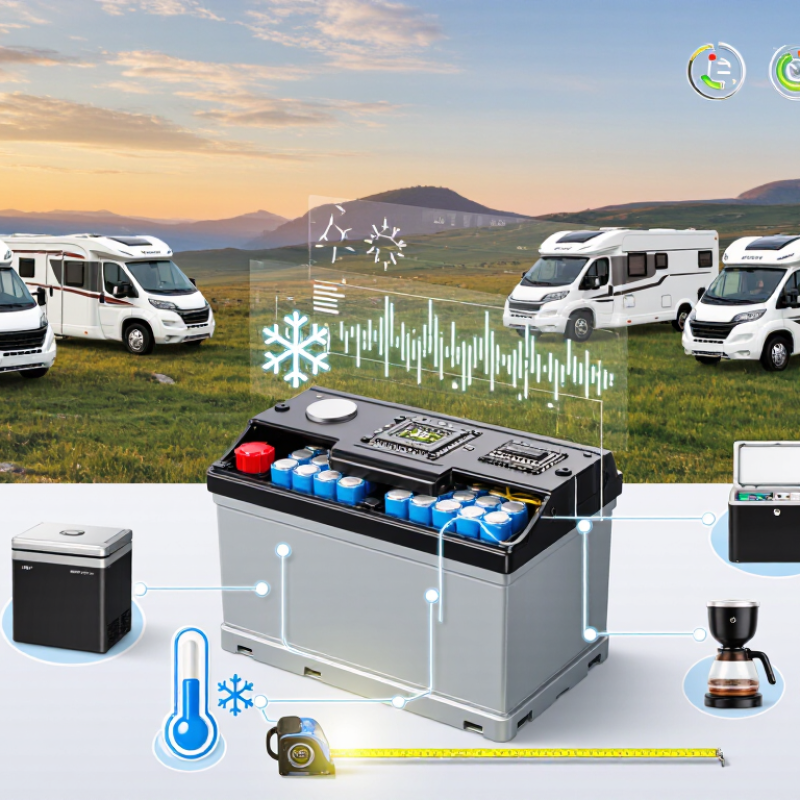
How to Choose the Best RV Lithium Battery

Understand RV Lithium Battery Chemistry and Types

RV lithium batteries are not one chemistry. Most use lithium iron phosphate (LFP) or nickel-rich lithium-ion cells, often grouped as NMC. LFP is valued for thermal stability and long cycle life. NMC typically stores more energy in less space, but demands careful temperature and battery-management controls. For a motorhome, that difference shows up as weight, storage space, and charging behavior.

The International Energy Agency reported that LFP supplied nearly 40% of global electric-car battery demand in 2023. That figure is not an RV market share, but it shows how established the chemistry has become. Many RV owners favor LFP for repeated daily cycling. A four-cell LFP pack commonly provides about 12.8 volts nominally, matching many “12-volt” systems. Check the inverter’s voltage limits and the charger’s lithium profile before buying. Small details matter.

Chemistry alone does not tell you whether a battery fits. Compare usable capacity, cold-weather charging limits, discharge rating, and built-in battery-management protection. A battery may advertise many cycles, yet that number depends on temperature, depth of discharge, and test conditions. Read the fine print. In practice, installation space and winter use can overturn a neat spreadsheet choice. I would not assume LFP is always best; it may be the wrong fit if low-temperature charging cannot be managed.

Calculate Your RV’s Energy Use and Battery Capacity Needs

How to Choose the Best RV Lithium Battery

Calculate your RV’s daily energy use before comparing battery specifications. List every appliance, its wattage, and expected daily operating hours. Multiply watts by hours to estimate watt-hours.

A 60-watt refrigerator running eight hours uses about 480 watt-hours. Add lighting, water pumps, fans, electronics, and heating controls. Small loads can quietly become significant.

Record your real usage for several camping days. A phone charger may use little energy, but an inverter can draw power even when idle. Include a 10–15% allowance for inverter and wiring losses.

For example, 1,500 daily watt-hours divided by a 12-volt system equals 125 amp-hours. That is only the nominal requirement.

A lithium battery should not normally operate at its absolute limit, so add practical reserve for cold mornings, cloudy weather, and unexpected use.

A 200-amp-hour battery may provide roughly 160–180 amp-hours of comfortable usable capacity, depending on its discharge settings and temperature. Check the battery’s continuous output rating, charging limits, low-temperature protection, and monitoring accuracy.

These details matter more than capacity alone. During field checks, I have found that estimated usage often misses coffee makers and electric cooking. My first calculation was too optimistic.

Measure again after a real trip, then adjust the battery size, solar input, or charging routine.

Check Voltage, Fit, and Compatibility with RV Systems

How to Choose the Best RV Lithium Battery

Voltage is the first checkpoint when choosing a lithium battery for an RV. Most recreational vehicles use a 12-volt system, but some larger setups use 24 volts. Match the battery voltage with the inverter, fuse panel, and appliances. A higher amp-hour rating does not correct a voltage mismatch.

I once focused only on capacity and overlooked the charging profile. That assumption was wrong. Lithium batteries often require a charger designed for their chemistry.

Measure the battery compartment before ordering. Check its length, width, height, and ventilation space. Leave room for cables and safe terminal access. Also inspect the terminal position and mounting method. A battery can have excellent specifications yet fail to fit securely.

Measure twice. Weight matters too.

A lighter battery may change how the compartment needs support during travel.

Compatibility extends beyond physical size. Confirm that the battery management system supports your inverter’s startup current. Check the solar controller, converter, alternator charger, and low-temperature protection. Some systems need communication cables or updated charging settings.

Review the RV’s existing wiring and fuse rating with a qualified technician. Older cables may be undersized for higher current loads.

I would not rely on a simple plug-in test, because hidden compatibility problems can appear under heavy demand. Keep the installation conservative, and record every setting for future checks.

Compare Safety Features, Lifespan, Charging, and Warranty

How to Choose the Best RV Lithium Battery

Safety should come before capacity. The U.S. Department of Energy’s 2023 Energy Storage Grand Challenge Roadmap identifies thermal runaway prevention, monitoring, and testing as core priorities. Look for a battery management system with overcharge, over-discharge, short-circuit, and temperature protection. Low-temperature charging protection matters during frosty mornings. A battery should block charging below its stated limit. Check independent test evidence, not only sales language. UL 1973 and IEC 62619 provide useful safety benchmarks for rechargeable battery systems. They are not magic shields. Installation quality still matters.

Lifespan depends heavily on heat, charging habits, and usable depth of discharge. NREL battery degradation research repeatedly links high temperatures and prolonged full charge with faster aging. Many lithium iron phosphate batteries advertise 3,000 to 5,000 cycles under controlled conditions. Real RV use may produce fewer cycles. That gap deserves attention. Choose a charger with a lithium profile and avoid leaving the battery fully charged for months. Charging at freezing temperatures can cause permanent damage. The IEA’s Global EV Outlook 2024 reports that lithium iron phosphate batteries represented nearly 40% of global electric-car battery demand in 2023, reflecting broader industry confidence in their durability and cost. For warranty review, check the guaranteed remaining capacity, cycle limits, transfer rules, and labor coverage. A ten-year term sounds impressive. It may provide limited value if capacity coverage declines early. Ask for written conditions before purchase.

Balance Installation Requirements, Monitoring, and Budget

Choosing an RV lithium battery begins with the equipment already installed. Check the battery compartment’s dimensions, cable access, and weight limits before comparing capacity. Then confirm that your converter, solar controller, and alternator charger support the battery’s charging profile. A mismatch may prevent full charging or require an upgrade. Check the battery’s continuous discharge rating against the inverter and appliances you plan to run. The battery management system should provide protection suited to your setup, including low-temperature charging protection if you camp in freezing weather. Small details matter.

Monitoring deserves a place in the budget. A shunt-based monitor can estimate state of charge more reliably than voltage readings alone, especially under changing loads. Clear readings help you notice a failing connection or unexpectedly high power use. Useful, but not magic. Allow for the cost of compatible charging equipment, cables, fuses, and installation—not just the battery. A lower-priced battery can become an expensive choice if it triggers several upgrades. It is easy to focus on amp-hours and overlook the system around them; that is a mistake worth avoiding. Compare complete, compatible setups, and leave some budget for adjustments after installation.

How to Choose the Best RV Lithium Battery — Balance Installation Requirements, Monitoring, and Budget
Battery Setup Approx. Usable Energy Best Fit Installation Requirements to Check Monitoring Considerations Indicative Battery-Only Budget (USD)
12.8 V, 100 Ah LiFePO₄ About 1.15 kWh, assuming 90% planned usable capacity Weekend trips, light loads, or a modest replacement for a single lead-acid battery Confirm the battery fits the compartment and that the BMS continuous-current rating supports the inverter and other loads. Built-in voltage or state-of-charge readings may be sufficient for basic use; a shunt monitor gives a more accurate estimate of remaining capacity. $250–$600
12.8 V, 200 Ah LiFePO₄ About 2.30 kWh, assuming 90% planned usable capacity Longer trips with moderate appliance use, such as lights, a refrigerator, and device charging Check battery dimensions, cable size, fuse rating, and the maximum discharge current required by any inverter. A shunt-based battery monitor is useful for tracking energy use; confirm that any communication features are compatible with the RV system. $450–$1,100
25.6 V, 100 Ah LiFePO₄ About 2.30 kWh, assuming 90% planned usable capacity RV electrical systems designed around a 24 V battery bank or higher-power installations Use only with a compatible 24 V inverter, charger, solar controller, and DC loads. Do not connect a 24 V battery directly to a 12 V system without suitable conversion equipment. Check that the monitor and charging equipment support the system voltage; a shunt monitor can track bank-level current and capacity. $500–$1,200
12.8 V, 400 Ah LiFePO₄ bank About 4.61 kWh, assuming 90% planned usable capacity Extended off-grid stays or higher daily energy use, provided the charging system can replenish the bank Verify available space, total bank current, conductor and fuse ratings, charging capacity, and the RV manufacturer’s limits. Parallel batteries should be approved for that configuration. A shunt monitor is strongly useful for a larger bank; check whether the BMS provides cell, temperature, and fault information. $900–$2,400
Cold-weather-ready LiFePO₄ option Depends on the selected voltage and amp-hour capacity RVs used in cold conditions where the battery may be exposed to freezing temperatures Many LiFePO₄ batteries must not be charged below 0°C (32°F) unless their design includes low-temperature charging protection or heating. Confirm the battery’s specified temperature limits. Look for clear temperature and BMS status information, especially if the battery is installed in an unheated compartment. Often higher than an equivalent non-heated battery; compare specifications and included features
Planning note: Energy figures use nominal voltage × amp-hours and assume 90% planned usable capacity; actual usable energy depends on the battery’s specifications, BMS limits, temperature, and load. Budget ranges are broad retail estimates for batteries only, exclude installation and charging-system upgrades, and vary by capacity and features. Before purchasing, verify charger compatibility, charging current, inverter demand, physical fit, temperature limits, and required safety protections.

FAQS

What lithium battery chemistries are common in RVs?

Many RV batteries use lithium iron phosphate (LFP) or nickel-rich NMC cells. LFP offers thermal stability and long cycle life. NMC can store more energy in less space, but needs careful temperature control. Small details matter.

How do I estimate my RV’s daily battery needs?

Multiply each appliance’s watts by its daily operating hours. A 60-watt refrigerator running eight hours uses about 480 watt-hours. Include lights, pumps, fans, and inverter losses. My first estimate missed cooking appliances.

How much usable capacity does a 200-amp-hour battery provide?

It may provide roughly 160–180 usable amp-hours, depending on settings and temperature. Leave reserve for cold mornings and unexpected use. Check the battery’s discharge limits.

Will an LFP battery work with a 12-volt RV system?

A common four-cell LFP pack supplies about 12.8 volts nominally. Check your inverter’s voltage limits and charger’s lithium profile before installation. Not always a simple swap.

Which battery safety features should I look for?

Choose a battery management system with overcharge, over-discharge, short-circuit, and temperature protection. Low-temperature charging protection is especially useful on frosty mornings. Verify the stated limits.

Can I charge a lithium battery in freezing weather?

Charging below the battery’s stated temperature limit can cause permanent damage. Use low-temperature protection and follow the battery’s instructions. Cold weather changes the plan.

How long might an LFP battery last?

Some advertise 3,000 to 5,000 cycles under controlled conditions. Real RV use may deliver fewer, especially with heat or prolonged full charging. The gap deserves thought.

What should I check in a battery warranty?

Review guaranteed remaining capacity, cycle limits, transfer rules, and labor coverage. A long term may offer limited value if capacity coverage falls early. Ask for written conditions.

Conclusion

Choosing the best Rv Lithium Battery starts with understanding the available lithium chemistries and how their performance, weight, and operating characteristics suit your travel needs. Estimate your daily energy use by listing the appliances and devices you plan to run, then allow enough capacity for your typical trips and a reasonable reserve. Consider how long you camp between charging opportunities, since this affects the battery size you need.

Before buying, confirm that the battery’s voltage, dimensions, and connections work with your RV’s existing electrical system and available space. Compare safety protections, expected service life, charging requirements, and warranty terms, and check whether your current charger or other equipment is compatible. Finally, account for installation effort, monitoring options, and total cost—not just the purchase price. A thoughtful comparison helps you choose a reliable setup that matches your RV, travel habits, and budget.


Isabella

Isabella

Isabella is a dedicated marketing professional with a sharp focus on driving brand growth and engagement through strategic content creation. With an extensive background in digital marketing, she combines her passion for storytelling with her keen understanding of industry trends to deliver......