China is an important sourcing base for LiFePO4 battery systems, including models with Bluetooth monitoring. Yet a product page rarely tells the whole story. A Lifepo4 Bluetooth Battery depends on more than its app or advertised capacity. Cell consistency, battery management, assembly quality, and support after delivery all matter. Small details matter.
This guide introduces notable Chinese manufacturers and the factors buyers can use to compare them. These include product range, customization options, documented quality controls, warranty terms, and technical communication. Bluetooth features may display voltage, current, temperature, and state of charge. Check which data the app actually provides, and whether it works with your phone and intended setup. Clear documentation helps make those claims easier to assess.
Specifications deserve careful attention. Ask how cycle-life figures were measured, what operating temperatures are supported, and which protections the battery management system provides. Confirm that the battery suits its intended use, such as an RV, solar installation, or marine setup. Supplier claims should be checked against current datasheets and relevant test records, not accepted from a headline alone. No shortlist is perfect. A comparison can still miss differences in production consistency or after-sales response, especially when information is limited. Treat this overview as a starting point, then request written details directly from each manufacturer. That extra step takes time, but it can reveal gaps before a purchase decision.
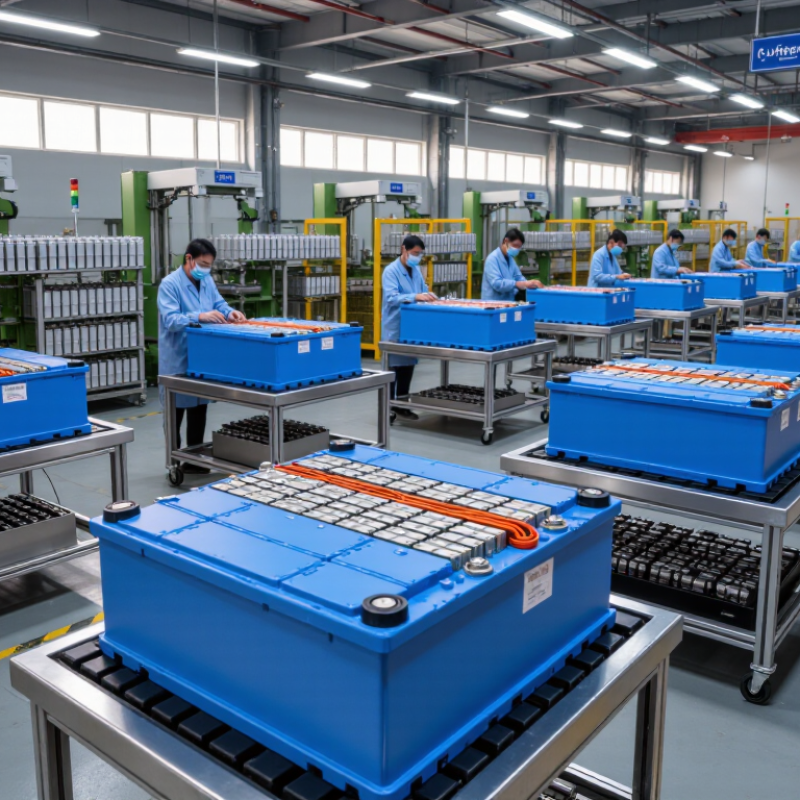
LiFePO4 Bluetooth batteries combine lithium iron phosphate cells with a battery management system (BMS) and a wireless connection. The cells store energy through reversible chemical reactions during charging and discharging. Compared with many other lithium-ion chemistries, LiFePO4 is known for thermal stability and long cycle life when operated within specified limits. That matters. A battery still needs correct charging and protection.
The BMS monitors conditions such as cell voltage, current, and temperature. It can limit charging or output when readings exceed its configured thresholds. Bluetooth lets a phone or tablet receive battery data over a short-range wireless connection. Depending on the model, an app may display charge level, voltage, temperature, or fault alerts. Not magic. The BMS does the protection work; Bluetooth mainly makes information easier to check.
For example, a user can glance at a phone beside a camper and see whether the battery is charging. Readings and available features vary, so the product documentation should guide setup and interpretation. A phone reading is useful, but it is not a laboratory measurement. Range can also shrink behind metal walls or inside a closed compartment. Keep connections secure, use a compatible charger, and treat unusual heat or repeated alerts as reasons to inspect the system.
| Specification or Feature | General LiFePO4 Reference | How It Works or What to Check |
|---|---|---|
| Battery chemistry | Lithium iron phosphate (LiFePO4 or LFP) | The cathode chemistry is known for thermal stability and long cycle life compared with many other common lithium-ion chemistries. Actual safety still depends on cell quality, pack design, and battery management. |
| Nominal cell voltage | Approximately 3.2 V per cell | Cells are connected in series to create higher-voltage packs. For example, a four-cell series pack is commonly described as a 12.8 V nominal battery. |
| Typical charging voltage | Often up to 3.65 V per cell, subject to the cell and pack specifications | The charger must match the battery’s specified charging profile. The battery documentation takes precedence over general reference values. |
| Discharge limit | Cell-level cut-off values commonly fall around 2.5–2.8 V, depending on the product | The battery management system (BMS) can disconnect the load to help prevent excessive discharge. Users should follow the pack maker’s stated limits. |
| Cycle life | Many products are rated for roughly 2,000–6,000 or more cycles under specified test conditions | Cycle-life figures depend on depth of discharge, temperature, charge rate, and the end-of-life capacity definition. Compare test conditions, not just the headline number. |
| Battery management system | Typically monitors cell or pack voltage, current, and temperature | A BMS may provide protections such as over-voltage, under-voltage, over-current, and temperature cut-offs. Protection features vary by design and should be confirmed for each model. |
| Bluetooth monitoring | Available on packs fitted with a Bluetooth-enabled BMS | A compatible phone app can display selected information such as state of charge, voltage, current, temperature, and alarms. The available readings depend on the BMS and its app. |
| Wireless connection | Bluetooth Low Energy commonly operates in the 2.4 GHz band | Connection range varies with the device, antenna, obstacles, and radio interference. Bluetooth monitoring does not replace BMS protection or a suitable charger. |
| Operating temperature | Product-specific; charging is often restricted near or below 0°C, while discharge may be allowed below 0°C | Low-temperature charging can damage lithium cells. Check the exact charge and discharge temperature limits and whether the pack has low-temperature charge protection. |
| Pack configuration | Series and parallel arrangements depend on the battery design and BMS | Do not assume packs can be connected together. Confirm permitted series or parallel use, compatibility, and connection instructions with the product documentation. |
| Quality and compliance checks | Requirements depend on the application and destination market | Ask for relevant test reports and transport documentation. Standards such as UN 38.3, IEC 62619, or UL 1973 may be relevant in specific contexts; applicability varies by product and market. |
| Manufacturer evaluation | Compare documentation, traceability, testing, warranty terms, and technical support | For Chinese manufacturers, request model-specific datasheets, cell and BMS specifications, production quality procedures, and reports that can be verified for the intended use. |
These are general reference points, not specifications for a particular battery. Confirm all voltage, temperature, cycle-life, Bluetooth, and compliance details in the documentation for the exact model.
Ask for batch-level cell test records, including capacity, internal resistance, self-discharge, and cell matching. A polished datasheet is not enough.
Compare displayed voltage and temperature with calibrated instruments. Test alarms and data retention, too. A connection alone proves little.
Review protection settings, firmware updates, balancing methods, and fault alerts. Ask how rejected cells are handled. Details matter.
Check continuous discharge current, cycle-life conditions, low-temperature charging protection, and the intended load. A large capacity figure can be misleading.
Ask for depth of discharge, test temperature, and test rate. Without those conditions, comparisons are weak. I would remain cautious.
Check the model number, issuing laboratory, document date, and applicable standard. One certificate may not cover an entire product range.
Test the battery near its intended metal enclosure and equipment. Range can change in that setting. Screenshots cannot show it.
No. It can reveal some processes, but not years of field performance. Independent sample testing helps, though it has limits.
A Lifepo4 Bluetooth Battery combines lithium iron phosphate chemistry with wireless monitoring, allowing users to check information such as voltage, temperature, and charge status through a connected device. Understanding how the battery communicates and what its monitoring features can—and cannot—tell you is an important first step when comparing suppliers.
When evaluating Chinese manufacturers, consider product range, manufacturing and quality-control capabilities, relevant certifications, technical support, and experience with your type of application. Compare specifications and documentation carefully rather than relying on feature claims alone. The right manufacturer should be able to explain how its batteries meet your requirements for capacity, operating conditions, integration, and ongoing support. By assessing these factors together, buyers can make a more informed choice and identify a supplier whose products and capabilities suit their intended use.

 Grenergy