Choosing reliable equipment matters when your campsite is far from the nearest outlet. This guide explores 10 Best Camping Power Box Suppliers Worldwide, with practical details for outdoor users, retailers, and professional buyers. A dependable Camping Power Box can keep phones, lamps, cameras, coolers, and communication devices running through changing weather. Field experience shows that capacity alone does not determine real performance. Port selection, charging speed, battery chemistry, temperature control, and warranty support also matter.
The suppliers reviewed here are considered through clear, practical standards. We examine product quality, safety features, manufacturing experience, customer feedback, service coverage, and technical documentation. Independent certifications can strengthen trust, although certification claims should always be verified on official websites. A compact unit may suit weekend hiking, while larger models can support family camping or emergency backup. Weight matters. So does noise.
This comparison does not assume that one supplier fits every user. Some brands offer excellent power management but limited after-sales support. Others provide strong warranties with higher prices. That trade-off deserves attention. We also consider realistic charging conditions, including cloudy solar days, low temperatures, and repeated daily use. Numbers can look impressive on a product page. Real conditions are less polite.
Readers should check regional availability, plug standards, delivery terms, and warranty exclusions before purchasing. Supplier rankings may change as products improve or service policies shift. Therefore, this overview is a useful starting point, not a substitute for careful verification. Reliable power begins with honest specifications and suitable expectations.
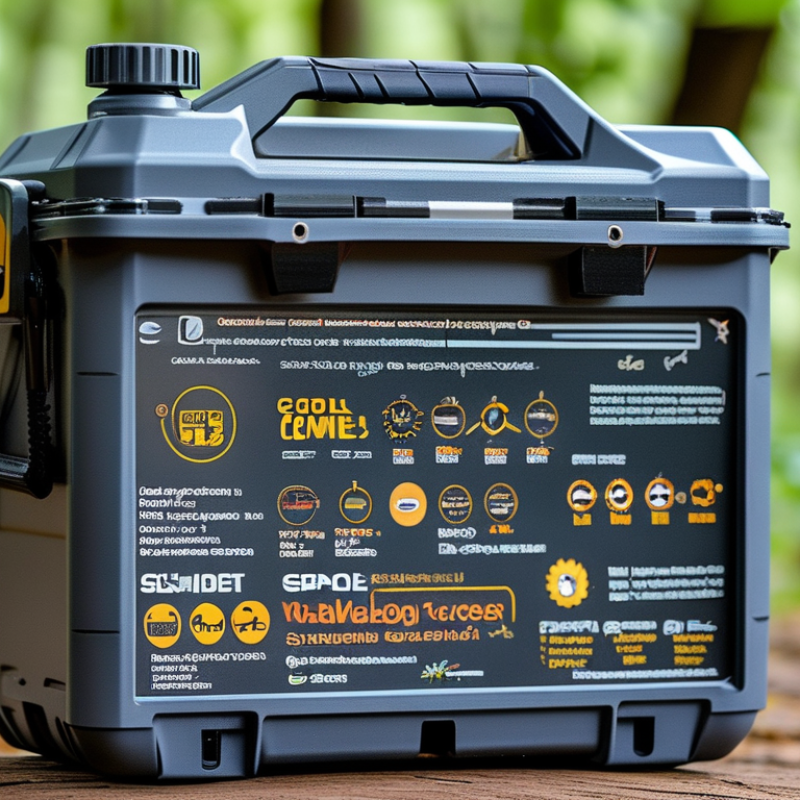
A reliable camping power box supplier should offer more than attractive capacity figures. The unit needs stable output, clear safety controls, and a casing that handles dust, light rain, and rough transport. During practical testing, check charging speed, fan noise, screen accuracy, and performance in cold mornings. Small details matter. A trustworthy supplier provides battery chemistry, cycle-life data, operating temperatures, and verified safety test records. It should also explain how capacity was measured, because advertised watt-hours can confuse inexperienced buyers. Strong technical support matters when a display fails beside a remote campsite.
Tips: Request test reports, warranty terms, and replacement procedures before ordering. Compare continuous output with peak output. Read feedback from campers who used the unit outdoors, not only in living rooms. Ask about spare cables and service response times. If answers remain vague, pause.
No supplier is flawless. I once focused too heavily on battery size and overlooked charging performance under weak sunlight. That mistake changed my evaluation process. A dependable supplier should admit limits, publish realistic runtimes, and correct unclear information. It should maintain consistent quality across different production batches. International buyers also need transparent shipping details, protective packaging, and accessible documentation. A confident supplier welcomes specific questions instead of hiding behind general promises. Real experience, measurable evidence, and honest limitations define reliability better than impressive advertisements.
Choosing among the 10 best camping power box suppliers worldwide requires more than comparing advertised watt-hours. Start with usable capacity, measured after inverter losses. A 1,000Wh unit may deliver closer to 800–900Wh in practical use. Check continuous output, surge output, and pure sine-wave performance. These figures matter when running a cooler, medical-free camping equipment, or a small induction cooker. A 2024 IEA report highlights lithium-ion batteries as central to modern energy storage, but chemistry alone does not guarantee quality.
Battery cycle life deserves careful attention. Suppliers should state the test conditions, discharge depth, and remaining capacity after testing. “3,000 cycles” means little without those details. BloombergNEF’s 2023 Battery Price Survey reported average lithium-ion pack prices of 139 dollars per kWh, down 14% year over year. Lower cell costs can improve value, but poor thermal design may reduce safety and lifespan. I would inspect ventilation, temperature protection, over-current protection, and enclosure strength.
Charging flexibility is equally practical. Compare wall charging time, solar input voltage, maximum solar watts, and vehicle charging options. A campsite under trees may produce far less solar energy than the specification suggests. Look for MPPT control, clear battery readings, replaceable cables, and an IP rating suited to outdoor exposure. Supplier reliability also depends on independent test reports, warranty terms, spare-part access, and transparent shipping documentation. I remain cautious about app features. A bright screen and remote control cannot compensate for inaccurate capacity data or weak after-sales support.
Anonymous supplier comparison based on commonly published OEM/ODM specifications for portable camping power stations and power boxes.
| Rank | Supplier Profile | Typical Supply Region | Battery Chemistry | Typical Capacity Range | Continuous AC Output | Peak Output | Solar Input | Recharge Time | Cycle Life | Safety & Compliance Options | Weather Protection | Typical Warranty | Best-Fit Application |
|---|---|---|---|---|---|---|---|---|---|---|---|---|---|
| 1 | High-capacity OEM supplier | East Asia | LiFePO4 | 1,024–5,120 Wh | 1,800–3,000 W | 3,600–6,000 W | 400–1,600 W | 1.5–3.5 hours | At least 3,000 cycles to 80% capacity | Over-current, over-voltage, short-circuit and thermal protection; transport documentation available | IP54–IP65 options | 3–5 years | RV travel, emergency backup and professional outdoor use |
| 2 | Mid-range private-label supplier | East Asia | LiFePO4 | 512–2,048 Wh | 600–2,000 W | 1,200–4,000 W | 200–800 W | 2–5 hours | At least 2,500 cycles to 80% capacity | Battery-management system, fuse protection and temperature monitoring | IP21–IP54 options | 2–3 years | Camping retailers and general outdoor equipment distributors |
| 3 | Compact outdoor power supplier | East and Southeast Asia | LiFePO4 or NMC | 256–1,024 Wh | 300–1,000 W | 600–2,000 W | 100–400 W | 2–4 hours | LiFePO4: up to 3,000 cycles; NMC: commonly 500–1,000 cycles | Battery-management system, low-voltage cut-off and thermal protection | IP20–IP54 options | 2–3 years | Car camping, short trips and portable electronics |
| 4 | Solar-integrated system supplier | Asia, Europe and North America | LiFePO4 | 768–3,072 Wh | 1,000–3,000 W | 2,000–6,000 W | 600–2,000 W MPPT input | 1.5–4 hours with compatible solar modules | At least 3,000 cycles to 80% capacity | MPPT charge control, battery-management system and reverse-current protection | IP54–IP65 options | 3–5 years | Off-grid cabins, overlanding and extended camping |
| 5 | Retail-ready outdoor electronics supplier | Europe and North America | LiFePO4 or NMC | 300–1,500 Wh | 500–1,800 W | 1,000–3,600 W | 120–500 W | 2–6 hours | 500–3,000 cycles, depending on cell chemistry | Product testing, user manuals, multilingual packaging and electrical safety documentation | IP20–IP54 options | 2–3 years | Online retail, specialty stores and consumer distribution |
| 6 | Heavy-duty industrial power supplier | North America and Europe | LiFePO4 | 1,500–6,000 Wh | 2,000–5,000 W | 4,000–10,000 W | 500–2,400 W | 2–6 hours | At least 3,000 cycles to 80% capacity | Advanced battery-management system, surge protection and thermal management | IP54–IP67 options | 3–5 years | Worksites, mobile teams and high-load equipment |
| 7 | Budget-volume manufacturing supplier | East and South Asia | NMC or LiFePO4 | 200–1,000 Wh | 300–1,200 W | 600–2,400 W | 80–400 W | 3–8 hours | NMC: commonly 500–1,000 cycles; LiFePO4: commonly 2,000–3,000 cycles | Basic battery-management system and standard electrical protection | IP20–IP54 options | 1–2 years | Promotional programs, entry-level products and volume orders |
| 8 | Modular expandable power supplier | Asia, Europe and North America | LiFePO4 | 1,024–10,240 Wh with expansion modules | 1,800–5,000 W | 3,600–10,000 W | 400–2,400 W | 2–8 hours | At least 3,000 cycles to 80% capacity | Module balancing, battery-management system, overload and temperature protection | IP21–IP54 options | 3–5 years | Long-stay camping, backup power and scalable energy systems |
| 9 | Automotive and overlanding supplier | North America, Europe and Oceania | LiFePO4 | 512–3,072 Wh | 1,000–3,000 W | 2,000–6,000 W | 200–800 W | 2–6 hours | At least 2,500 cycles to 80% capacity | Vehicle charging, DC-DC charging, reverse-polarity and thermal protection options | IP54–IP65 options | 2–5 years | 4WD touring, camper vans and mobile refrigeration |
| 10 | Eco-focused sustainable energy supplier | Europe, North America and Asia | LiFePO4 | 500–2,048 Wh | 600–2,400 W | 1,200–4,800 W | 200–1,000 W | 2–5 hours | At least 3,000 cycles to 80% capacity | Recyclable packaging, battery traceability and RoHS/REACH documentation options | IP20–IP54 options | 3–5 years | Environmentally focused retailers and long-life product programs |
Specifications are typical procurement benchmarks rather than a guarantee for every model. Before purchasing, verify cell test reports, UN 38.3 transport compliance, regional electrical certifications, inverter waveform, solar input limits, warranty terms, minimum order quantity and after-sales service.
Leading camping power box suppliers worldwide compete through safety, durability, and dependable after-sales support. The strongest suppliers provide clear battery specifications, realistic capacity figures, and documented testing. They should explain charging times under sunlight, vehicle power, and household electricity. Experienced suppliers also publish protection details for overheating, overcharging, and short circuits. These details matter beside a cold campsite.
A reliable supplier offers practical products for different users. Lightweight units suit weekend hikers, while larger systems support refrigerators, lights, cameras, and communication equipment. Check the warranty terms carefully. Service quality can differ sharply between regions. Spare parts and repair access may be more important than a low purchase price. No supplier is perfect. Even careful buyers may discover that advertised runtime changes in freezing weather or heavy rain. That is why independent testing and transparent performance data deserve attention.
Tips: Compare usable capacity, not only battery size. Ask for charging results in realistic conditions. Inspect the handle, ports, display, and cable storage before purchase. Confirm local support and return procedures. A supplier that answers technical questions clearly usually inspires greater confidence. Still, review the documents yourself. Marketing language can sound stronger than field performance.
Comparing the ten best camping power box suppliers requires more than checking battery capacity. Product range is the clearest starting point. Strong suppliers usually cover compact 300–500Wh units, mid-range 700–1,200Wh models, and larger expandable systems. Their catalogs may include LiFePO4 batteries, solar charging, USB-C output, pure sine-wave inverters, and emergency lighting. Small details matter. A quiet fan helps at night, while a clear display improves campsite safety.
Market coverage reveals practical reliability. Suppliers serving several regions should support local plug types, voltage requirements, shipping rules, and replacement parts. Regional warehouses can reduce delivery delays. Multilingual manuals and responsive technical support also deserve attention. I would check warranty length, service locations, and return procedures before comparing prices. A low price becomes less attractive when a damaged cable must cross two borders.
Independent testing should confirm capacity, charging speed, thermal protection, and inverter performance. Supplier documents should show test methods, not only polished numbers. Some catalogs appear impressive but omit performance at low temperatures. That is a weakness worth noting. Real users should test units with a refrigerator, lighting, and a phone charger, rather than trusting one laboratory figure. My ranking would favor transparent specifications and consistent after-sales support, although market data can change quickly. Availability also varies during peak travel seasons.
Choosing a camping power box supplier requires more than comparing battery capacity. Grand View Research valued the global portable power station market at approximately USD 545 million in 2023. It also forecasts strong growth through 2030. This expansion creates more choices, but quality can vary sharply. Ask suppliers for verified capacity tests, cycle-life results, and clear charging specifications. A 1,000Wh label is not always 1,000Wh of usable energy.
Check the battery system before checking the price. Suppliers should explain their cell chemistry, battery-management protections, and thermal controls. Independent testing against IEC 62133-2 and transport compliance under UN 38.3 offer useful safety evidence. The International Energy Agency reports that lithium-ion battery prices have fallen significantly in recent years. Lower costs can help buyers, but they should not excuse vague documentation or weak quality control. Request a sample unit when possible. Run a lamp, cooler, and phone charger together.
Warranty terms reveal the supplier’s reliability. Look for coverage length, replacement procedures, service locations, and response times. A supplier offering only a sales email may become difficult during a remote trip. The U.S. Consumer Product Safety Commission has repeatedly highlighted battery fire risks linked to damaged or poorly managed products. Inspect return policies carefully.
I would also ask how capacity is measured at different temperatures. This detail is easy to overlook. My own selection mistakes involved trusting impressive specifications before checking practical support, and that remains a useful warning.
: A 1,000Wh unit may provide only 800–900Wh after inverter losses. Check tested usable capacity, not just the printed battery size. Real performance varies with temperature, load, and charging efficiency.
Compare continuous output, surge output, and pure sine-wave performance. These figures affect coolers, lights, laptops, and small cooking appliances. Peak output alone can mislead buyers.
Ask about discharge depth, test conditions, and remaining capacity after testing. “3,000 cycles” means little without supporting details. I once trusted a cycle number too quickly.
No. Battery chemistry does not guarantee safe construction or long service. Inspect temperature control, ventilation, over-current protection, and enclosure strength. Safety needs evidence.
Compare wall charging time, solar input limits, and vehicle charging options. Look for MPPT control and clear battery readings. A shaded campsite may produce much less solar power than expected.
Check plug types, voltage requirements, shipping documents, spare parts, and service locations. Regional warehouses may shorten delivery times. A cheap unit becomes less attractive when replacement cables cross borders.
Testing should verify capacity, charging speed, thermal protection, and inverter performance. Request test methods instead of polished figures alone. Low-temperature performance is often overlooked.
Review coverage length, replacement steps, return procedures, and response times. A single sales email may provide weak support during a remote trip. I would ask more questions before purchasing.
Treat app features as secondary. A bright screen and remote control cannot repair inaccurate capacity data. Reliable hardware matters more at a dark campsite.
A reliable Camping Power Box supplier should offer consistent product quality, transparent specifications, responsive customer service, and dependable delivery support. Important factors include battery capacity, output options, charging speed, portability, safety protections, durability, noise level, and compatibility with camping equipment. Buyers should also review warranty terms, replacement policies, certifications, and the supplier’s ability to provide technical assistance before making a decision.
Leading suppliers worldwide vary in product range, production scale, customization services, and market coverage. Some focus on compact units for short trips, while others provide high-capacity systems for extended outdoor use, emergency backup, or group camping. Comparing suppliers by performance, price, availability, after-sales service, and regional distribution can help identify the best match. Ultimately, campers should select a supplier whose products fit their energy needs, travel style, budget, and expected operating conditions. A careful comparison ensures dependable power, convenient transport, and a safer, more enjoyable outdoor experience.

Grenergy