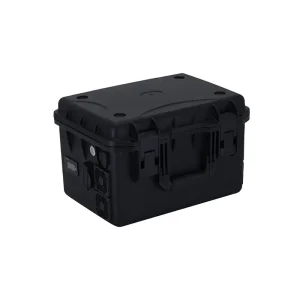
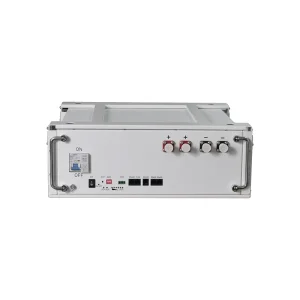
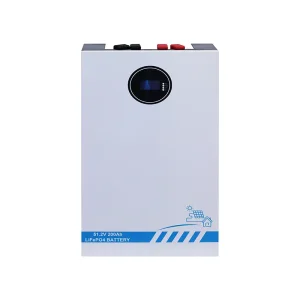
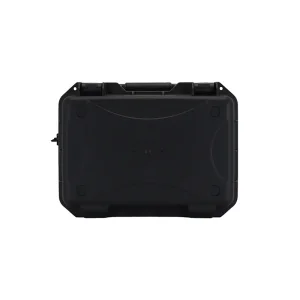
Explore our leading lithium energy storage units designed for industrial, residential, and commercial operations worldwide.
A rigorous dive into the electrochemistry, cell thresholds, and system efficiencies of Lithium Iron Phosphate cells.
Lithium Iron Phosphate (LiFePO4) chemistry represents one of the most stable, secure, and long-lasting energy storage mechanisms currently available. However, unlocking its maximum life expectancy and operational capacity requires a precise understanding of the charging profiles—specifically, the bulk charging voltage. This phase of charging, often termed the Constant Current (CC) phase, transitions into the Constant Voltage (CV) absorption phase. For a single nominal 3.2V LiFePO4 cell, the standard bulk charging voltage threshold is typically set between 3.60V and 3.65V.
Setting the charging parameters correctly prevents lithium plating on the anode, minimizes thermal stress, and guarantees active cell balancing during the high-voltage threshold phase. If the bulk voltage is set too low (e.g., below 3.4V per cell), the cell will not reach its maximum state of charge (SoC). Conversely, exceeding 3.65V per cell risks triggering localized cell degradation, electrolyte breakdown, and eventual capacity fade.
"Optimizing the bulk charging voltage transition is not just about efficiency—it is the direct metric that dictates whether a commercial LiFePO4 system delivers 3,000 cycles or exceeds 6,000 cycles at 80% Depth of Discharge (DoD)."
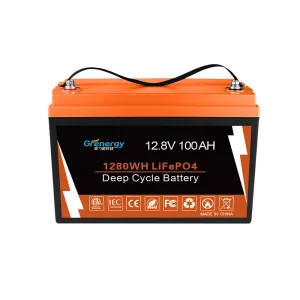
For modular battery configurations, such as 12V (4S), 24V (8S), and 48V (16S) battery packs, the cumulative bulk charging voltages are 14.4V-14.6V, 28.8V-29.2V, and 57.6V-58.4V respectively. At the global manufacturing level, exporters and developers must engineer Battery Management Systems (BMS) that actively regulate these variables under varying dynamic loads.
During the bulk charge stage, the charger delivers maximum current to the cells, causing the voltage to rise steadily. As the voltage approaches the bulk threshold, the BMS starts calculating cell deviations. Active balancing systems typically initiate between 3.40V and 3.45V, where the cell voltage curve starts rising sharply. Maintaining a stabilized, well-balanced cell array ensures that individual cell voltages do not spike prematurely, triggering BMS over-voltage safety cuts before the entire pack is fully saturated.
| System Configuration | Nominal Voltage (V) | Recommended Bulk Charging (V) | Float Charging Voltage (V) | BMS Protection Cut-off (V) |
|---|---|---|---|---|
| Single Cell (1S) | 3.2V | 3.60V - 3.65V | 3.35V - 3.40V | 3.75V |
| 12V Battery Pack (4S) | 12.8V | 14.4V - 14.6V | 13.4V - 13.6V | 15.0V |
| 24V Battery Pack (8S) | 25.6V | 28.8V - 29.2V | 26.8V - 27.2V | 30.0V |
| 48V Battery Pack (16S) | 51.2V | 57.6V - 58.4V | 53.6V - 54.4V | 60.0V |
Pioneering sustainable lithium technology with certified quality, rigorous engineering, and scalable manufacturing.
Established in 2010, Shenzhen Grenergy Technology Co., Ltd. is a recognized high-tech enterprise specializing in the research, development, and manufacturing of lithium batteries, integrated energy storage systems (ESS), motive power batteries, battery management systems (BMS), and all-in-one green energy solutions. With a persistent focus on technological innovation and engineering excellence, Grenergy has established itself as a leading global provider of energy solutions for commercial, industrial, and residential applications.
Since its inception, Grenergy has focused on developing sustainable, high-cycle energy solutions to address the global shift toward green electricity. Over the past decade, we have designed a versatile product portfolio, including lead-acid replacement batteries, wall-mounted solar power storage solutions, portable and trolley-style outdoor power stations, and custom rack-mounted ESS modules.

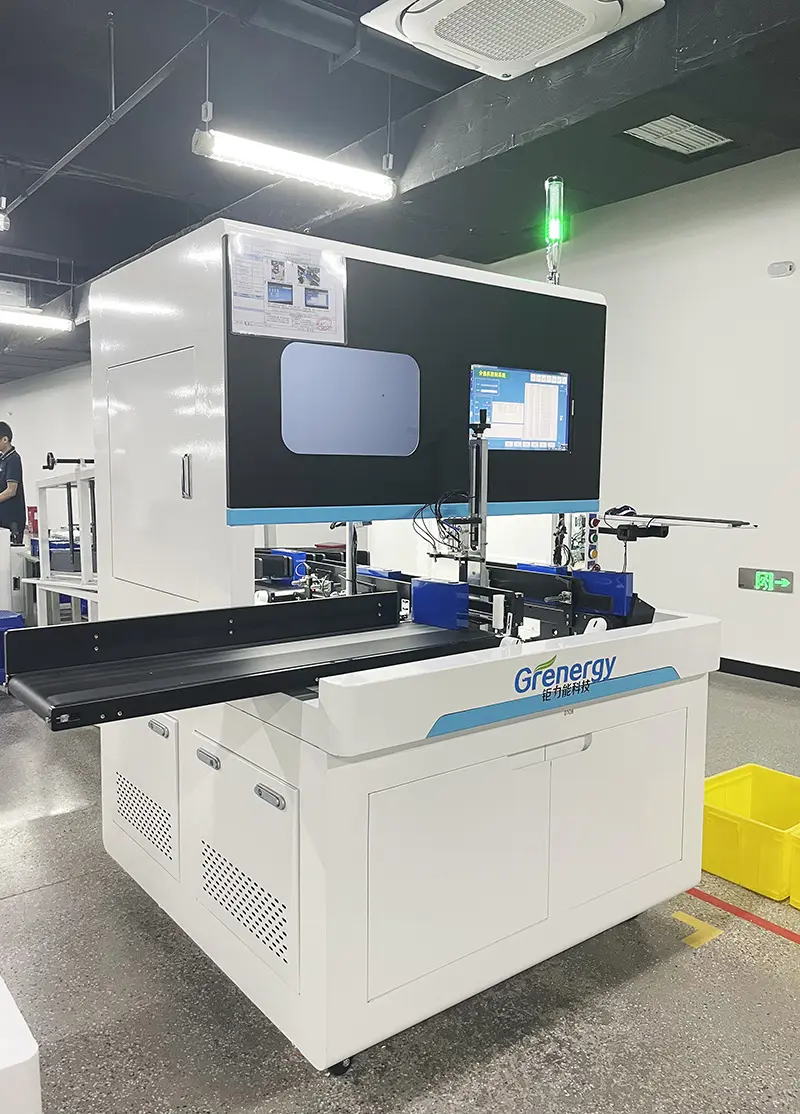
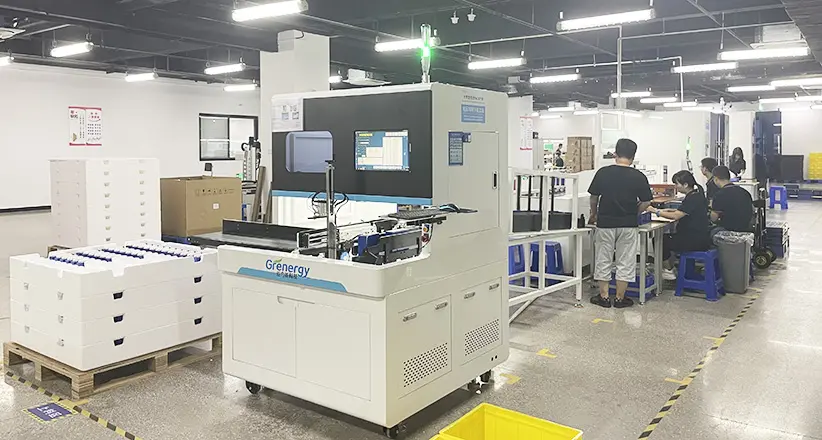
Through our dedicated R&D efforts, we offer flexible OEM and ODM services to meet custom industrial voltage, form factor, and capacity requirements. Our state-of-the-art manufacturing processes are certified to international standards including ISO9001, ISO14001, and ISO45001. All exported products undergo strict quality checks to meet global compliance directives, including UL, CE, FCC, PSE, and UN38.3 certification protocols.
Analyzing global demand, market shifts, and technology adoption in macro-industrial battery setups.
The transition from traditional lead-acid batteries to Lithium Iron Phosphate (LiFePO4) systems across industrial sectors is accelerating rapidly. Industries are leveraging the high energy density, thermal safety, and superior cyclic lifespan of LiFePO4 cells to drive down total cost of ownership (TCO). A major focus of this optimization lies in smart charge integration. Commercial microgrids, high-voltage material handling equipment, and telecom backup systems utilize precision charging schemes to maximize energy throughput.
Grenergy's manufacturing systems integrate smart telemetry, allowing data-driven energy tracking. Our systems are deployed in key global regions—spanning North America, Europe, Australia, and Southeast Asia. The inclusion of a $3 million USD third-party product liability insurance policy ensures our enterprise clients are fully covered against operational risks, highlighting our commitment to quality and service security.

By monitoring charging curves in real-time, our engineers have compiled performance metrics confirming that maintaining cell temperatures below 35°C during the bulk charge phase directly preserves electrode integrity over long-term cycle regimes. This is achieved by programming conservative absorption voltages and using low internal resistance cells in our custom configurations.
Scaling LiFePO4 setups for megawatt-level operations, utility backups, and continuous energy stabilization.
For megawatt-scale solar installations and smart microgrids, charging strategies must adapt to changing inputs like solar irradiance. Unlike standard grid chargers, solar controllers charge dynamically based on available sunlight. This makes it critical to select exporters who design high-tolerance BMS systems capable of handling varying current inputs while maintaining a strict bulk voltage ceiling.
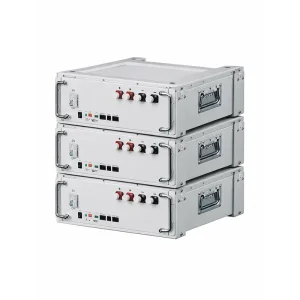
Our industrial-grade floor-mounted cabinets and rack-mounted arrays are designed to integrate seamlessly with leading inverter brands. They feature customizable parameters that prevent over-voltage damage during high solar peaks. By stabilizing the DC bus voltage, these systems enable smoother power delivery back to the grid or load, ensuring reliable energy management for commercial facilities.
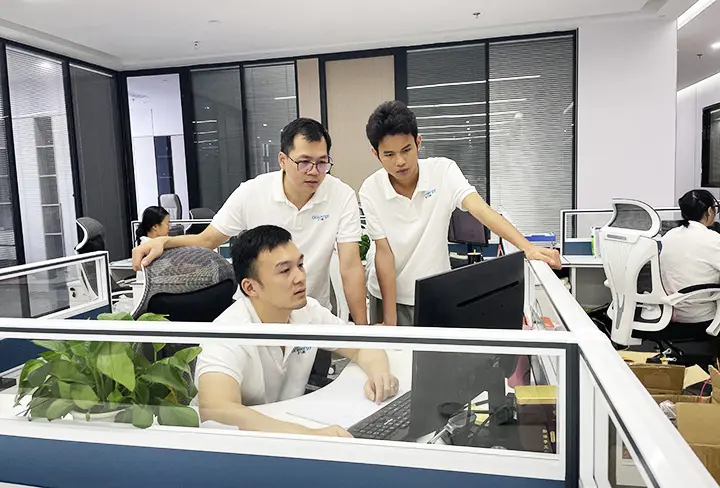
Through our decades-long focus, we have optimized our cell layouts to withstand localized seismic vibrations and temperature fluctuations. Structural integrity and uniform pressure across cells in our modular racks prevent electrode expansion, ensuring reliable contact and consistent charging across the battery life cycle.
Customizing charge voltage settings to handle high-temperature, low-temperature, and mobile requirements.
Charging standard lithium batteries at sub-zero temperatures can lead to lithium plating and internal short circuits. To address this, Grenergy designs specialized low-temperature packs featuring built-in thermal heating elements. The BMS automatically route input charge current to heat the cells to 5°C before allowing bulk charging to start, ensuring safe operation in cold climates.
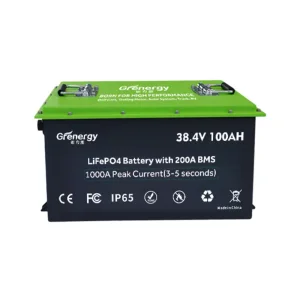
Motive power applications require quick charge cycles and high discharge rates. In vehicles like golf carts and automated guided vehicles (AGVs), the batteries face constant vibration and varying loads. Our high-voltage solutions (such as our 51.2V and 76.8V modules) are engineered to absorb regenerative braking energy without tripping over-voltage protections. This is achieved by tuning the bulk voltage ceiling slightly below the maximum limit, leaving a buffer for kinetic energy recapture.
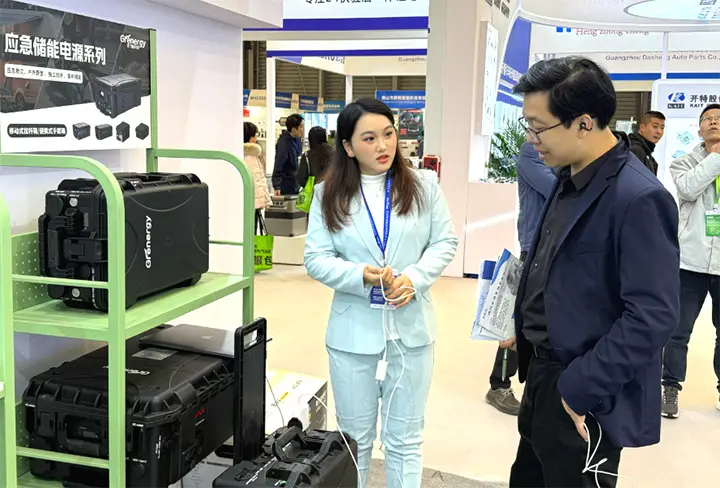
Why Tier-1 developers and international energy procurement teams choose Grenergy Technology.
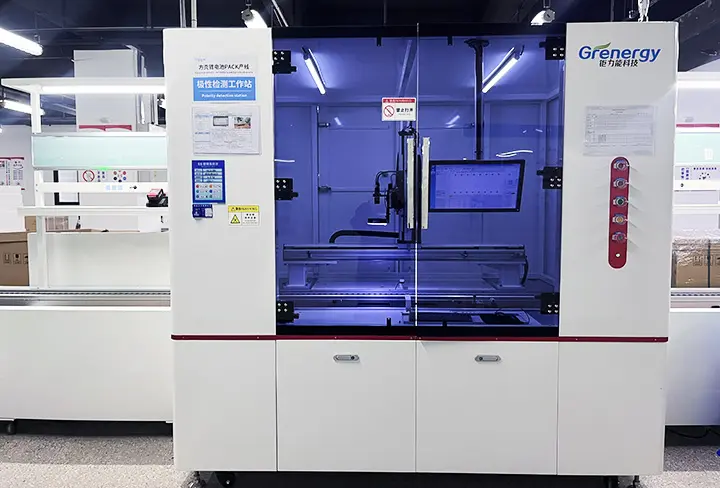
In the industrial battery market, reliability and safety are paramount. Operating grid-tied storage systems or vehicle fleets carries inherent risks, making clear product compliance and risk management essential. With over 10 years of experience, Grenergy provides transparent verification for every product shipped.
Our long-term partnerships with tier-1 semiconductor providers, raw cell material suppliers, and grid inverter manufacturers allow us to stay at the forefront of the industry. We work closely with our partners to ensure our advanced BMS designs integrate seamlessly with their components, providing reliable and safe operations for our clients.
"Partnering with Grenergy allowed us to deploy 500+ commercial solar storage sites across Europe. Their precise charging controls and proactive support made all the difference." — Senior Microgrid Installer, Munich
A look at next-generation solid-state chemistry, AI-driven BMS, and high-voltage grid topologies.
As the battery industry evolves, future designs will move toward higher energy densities and smarter, more adaptive control systems. Grenergy's research team is actively developing and testing advancements in several key areas:
Implementing predictive machine learning models directly into the BMS firmware to monitor cell health, estimate SoC/SoH, and dynamically adjust bulk charging voltages based on real-time cell degradation.
Transitioning from standard low-voltage configurations to high-voltage arrays exceeding 700V. This architecture reduces cable thickness and transmission losses in utility-scale energy projects.
Developing composite anodes that support higher charge rates while preventing lithium plating, allowing systems to sustain faster charging cycles safely.
Get answers to common technical questions about configuring LiFePO4 charging profiles and system parameters.
Explore our high-voltage motive batteries, portable power solutions, and high-capacity storage racks.

 Grenergy