Explore our premium product line, designed to meet rigorous global standards and performance criteria. Optimized for rack integrations, solar utility, and mobile application setups.
Commercial and industrial energy transition relies heavily on next-generation battery architectures. As grids worldwide face destabilization, decentralization has evolved from a progressive goal to an immediate economic necessity.
Modern Battery Energy Storage Systems (BESS) represent the foundation of modern grid resilience, microgrid integration, and renewable self-consumption optimization. Globally, policy shifts such as the US Inflation Reduction Act (IRA) and the EU's Net-Zero Industry Act have catalyzed large-scale procurements. Today's commercial enterprises seek systems that offer high round-trip efficiency (RTE), optimized C-rates for specific loads, and unmatched thermal runaway protections to assure plant and investment safety over decades of service.
We align our design, materials engineering, and software stack with these global demand signals. By focusing on Lithium Iron Phosphate (LiFePO4) chemistries, our solutions provide safety, cycle lifetimes exceeding 6000 cycles, and environmental neutrality compared to traditional cobalt-based options.

A data-backed look at how different system voltages and configurations map to actual commercial, industrial, and mobile workloads.
| System Type | Common Voltage & Capacity | Primary Target Market | Ideal Application Scenario | Key Standard Compliance |
|---|---|---|---|---|
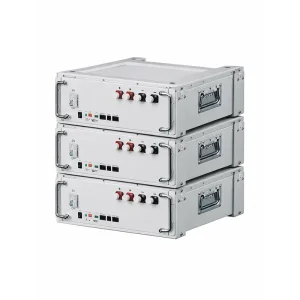
| High-Voltage Rack-Mount | 51.2V 314Ah (16.07kWh) | C&I ESS / Grid Peak Shaving | Scaling into Multi-Megawatt Containers | UL 1973, IEC 62619, UN38.3 |
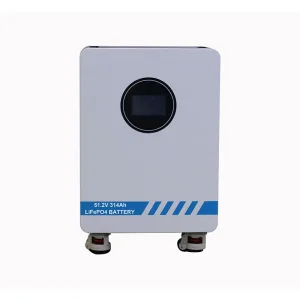
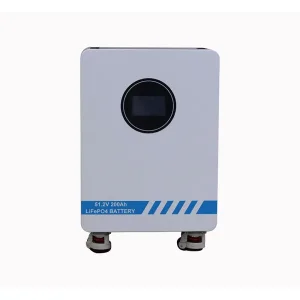
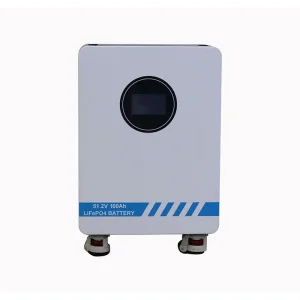
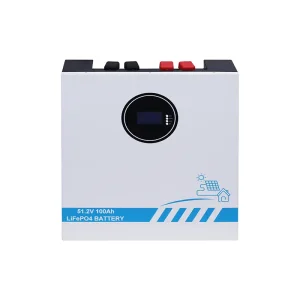
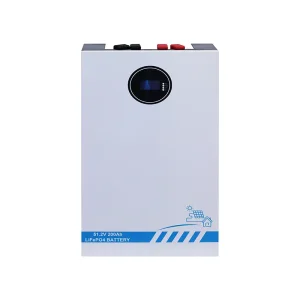
| Home ESS Cabinet | 51.2V 200Ah / 100Ah | Residential Solar Integration | Daily backup, peak/off-peak price optimization | CE, CEI 0-21, UN38.3 |
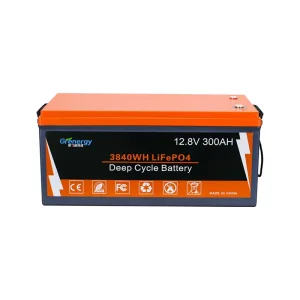
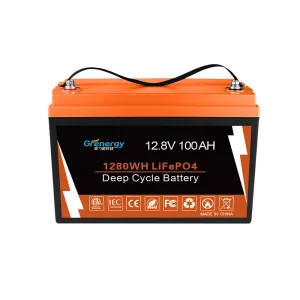
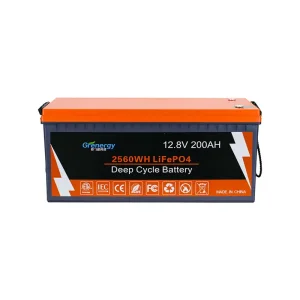
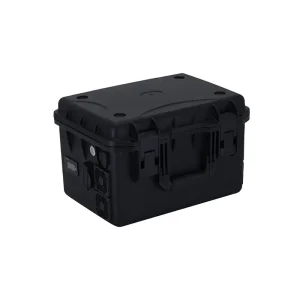
| Deep-Cycle Mobile | 12.8V 300Ah / 200Ah | RV, Marine, Auxiliary Power | Off-grid recreational & service vehicle power | UN38.3, FCC, PSE |
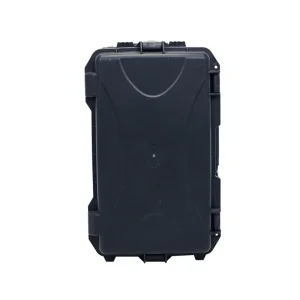
| Trolley & Portable ESS | 25.6V 100Ah (1500W-2500W AC) | Emergency Dispatch / Outdoor | Disaster response, field research, mobile clinics | CE, FCC, PSE, UN38.3 |
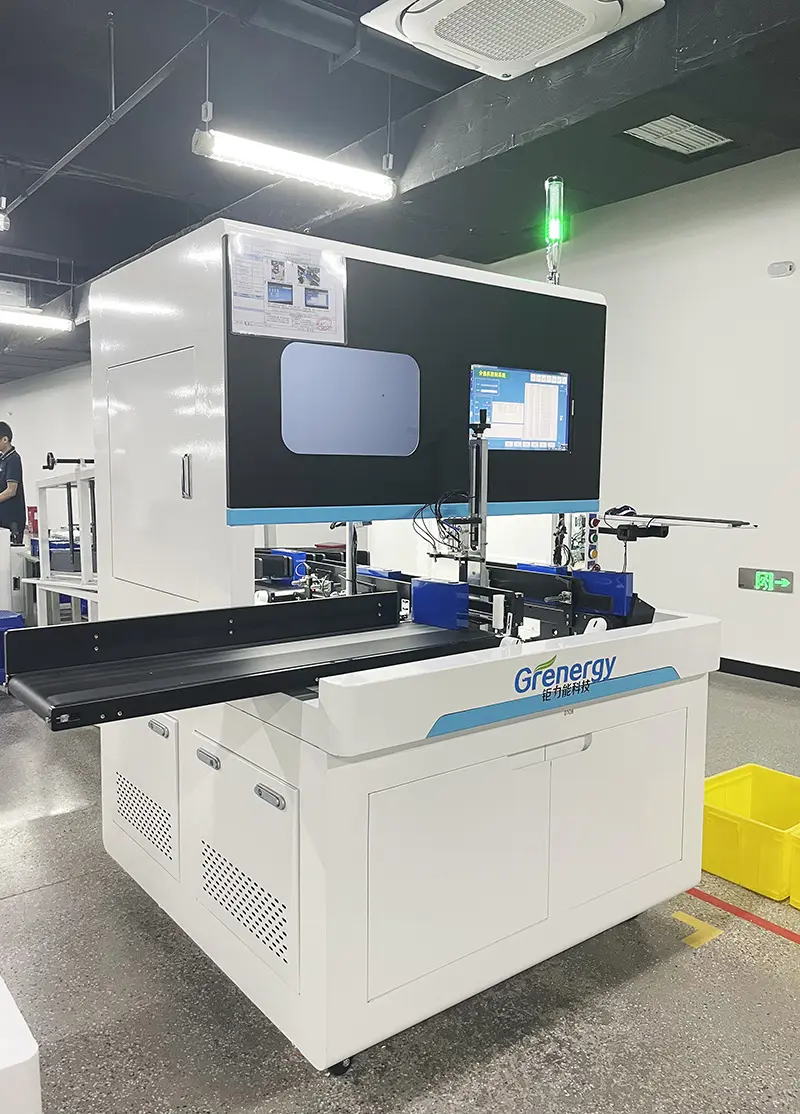
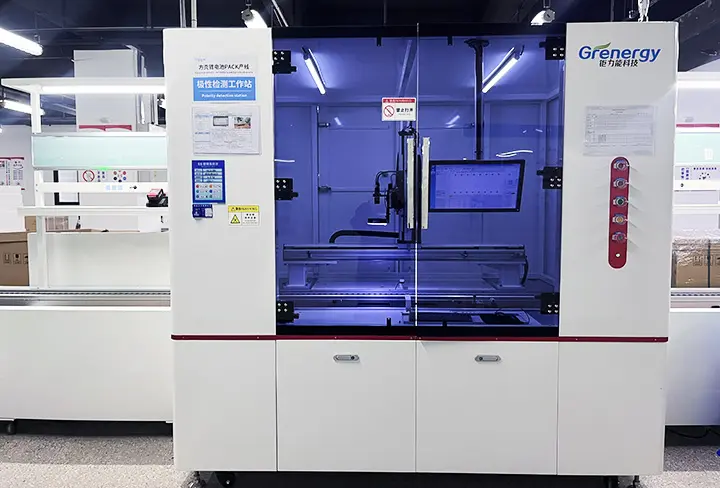
Shenzhen's industrial clusters combine component access with advanced automation systems.
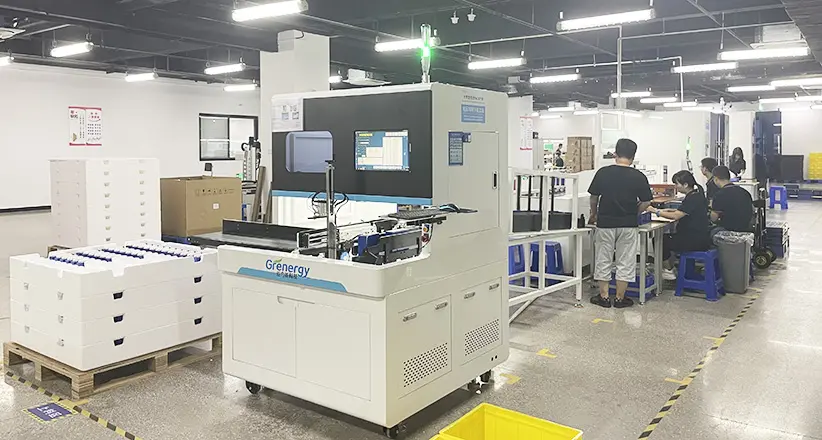
China's supremacy in the global energy storage supply chain rests on complete ecosystem integration. From lithium mining and refinement to cathode/anode production, BMS programming, and automated cell matching, every link of the supply chain operates in geographical proximity. As a premier manufacturer in Shenzhen, Grenergy utilizes this environment to offer reliable component sourcing, rapid OEM prototypes, and scale manufacturing.
Furthermore, the implementation of Smart Factory technologies—specifically high-precision laser welding, automated sorting systems, and computerized aging systems—reduces cell variance. In battery systems, variance limits lifespan. By ensuring that every cell within a 51.2V rack matches in internal resistance and capacitance down to micro-tolerances, our factory maximizes real-world cycle life while lowering overall Levelized Cost of Storage (LCOS).
Shenzhen Grenergy Technology Co., Ltd. - A Premier Name in Lithium Storage Technologies
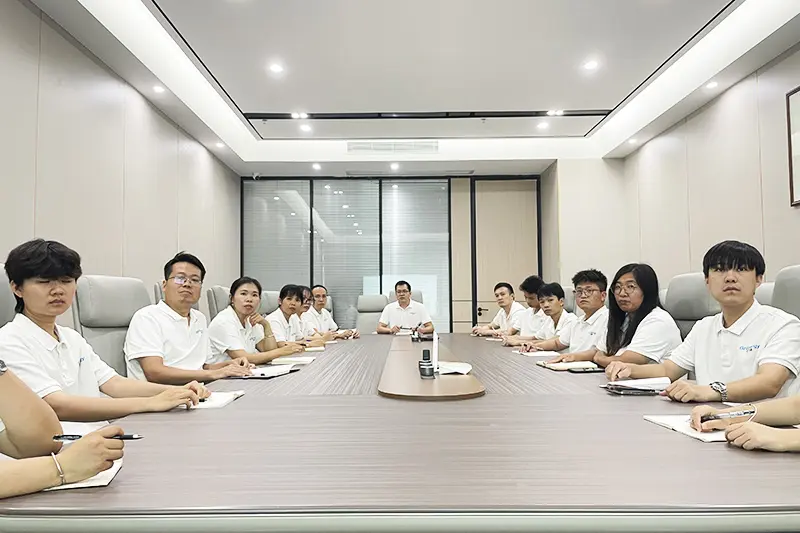
Shenzhen Grenergy Technology Co., Ltd., established in 2010, is a high-tech enterprise specializing in the R&D and manufacturing of lithium batteries, energy storage systems, power batteries, battery management systems, and all-in-one solutions. With a strong commitment to technological innovation, Grenergy has become a leading provider of energy solutions for various applications worldwide.
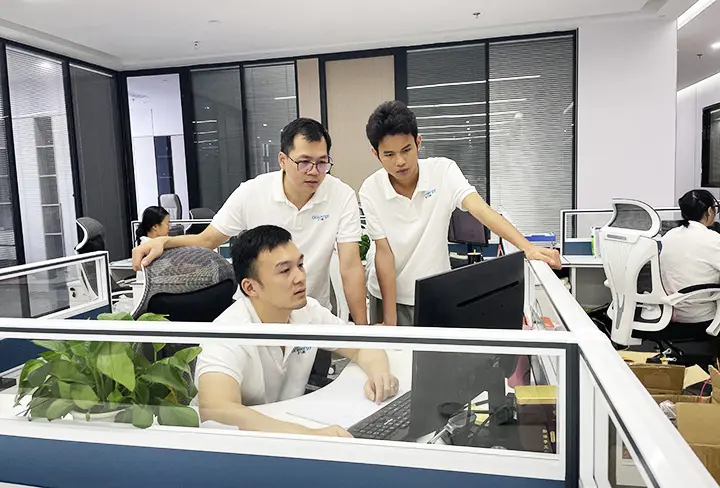
We pride ourselves on technical mastery of the storage lifecycle. Our R&D team continuously refines BMS topologies, enabling seamless integrations with major inverter protocols worldwide, while our mechanical design team focuses on space optimization and structural safety in compliance with modern fire safety regulations.
Over a Decade of Clean Energy Innovation and Global Reach
Since its establishment, Grenergy has focused on the development of sustainable energy solutions to meet the growing demand for efficient, reliable, and eco-friendly power systems. With over 10 years of expertise, Grenergy has developed a diverse product portfolio, including Lead-acid replacement lithium batteries, Wall-mounted power walls, Portable power stations, Mobile home energy storage systems, Trolley box portable power stations, and much more. We are committed to enhancing energy efficiency while reducing environmental impact.
Our core values include integrity, innovation, and customer satisfaction, which have been the foundation of our growth. Grenergy’s history is one of continuous improvement and dedication to providing advanced energy storage solutions to businesses and individuals globally.
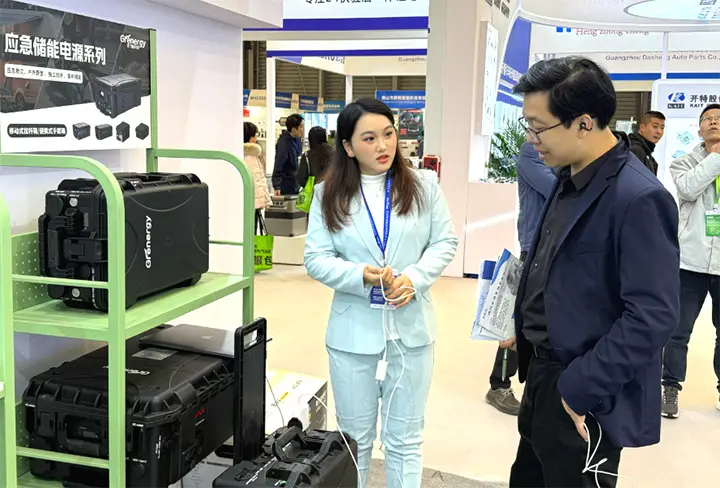
How BESS solutions adapt to environmental, regulatory, and mechanical challenges across different continents.
Commercial clients in North America utilize 51.2V rack systems (such as our 314Ah series) to mitigate high demand charges. By storing cheap energy off-peak and discharging it during peak utility hours, facilities lower operating overhead. Integrations require strict compliance with UL 9540A testing protocols to ensure system safety inside industrial parks.
High retail power prices across Europe drive residential solar owners to deploy 5.12kWh wall-mounted LiFePO4 packs. These high-voltage systems communicate directly with three-phase hybrid inverters, storing daytime PV yields for nighttime discharge, maximizing green energy usage, and reducing dependency on unstable grid networks.
Remote agricultural properties and mining exploration camps rely heavily on robust off-grid configurations. Systems like our 51.2V floor-mounted cabinets provide high shock resistance and run efficiently under hot ambient conditions, replacing diesel generators with solar storage configurations.
Rigorous manufacturing control translates to verifiable safety on site.
Grenergy’s products support various OEM and ODM customized services, allowing us to tailor solutions that meet specific client needs. With nearly 10,000 square meters of production space and a team of 200 highly skilled professionals, we are equipped to deliver high-quality products at scale. Over the years, we have consistently met international industry standards, earning certifications such as ISO9001, ISO14001, ISO45001, UL, CE, FCC, PSE, and UN38.3.
We also provide third-party product liability insurance worth $3 million USD for all products, ensuring our global clients can trust our reliability and commitment to service excellence. This mitigation of liability risk is crucial for EPCs and commercial installers who operate in highly regulated markets.
Strategic technology directions driving the design choices of energy storage systems over the next decade.
The global transition to 314Ah cells has accelerated. Our newest 51.2V systems integrate these high-capacity cells to pack more energy density into the same mechanical footprints. This reduces the cost per watt-hour, simplifies container layout, and minimizes structural assembly weight.
Battery management systems are shifting from local controls to cloud-connected platforms. Predictive diagnostics, cell aging tracking, state of charge (SoC) calculations, and remote firmware updates are now industry standards. This ensures systems remain reliable over long operational cycles.
Safety is the primary consideration for indoor and utility deployments. The industry is moving from simple thermal monitoring to dual-active safety mechanisms. This combines aerosol extinguishing agents within individual rack enclosures with gas sensor relays to isolate packs before thermal runaway occurs.
Premium OEM and ODM products tailored for commercial applications, field utility, and electric mobility systems.
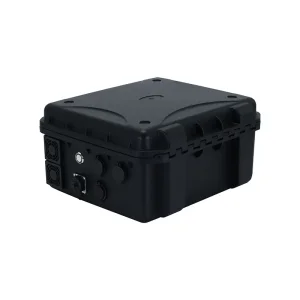
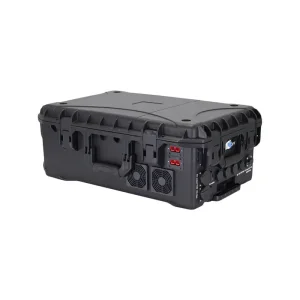
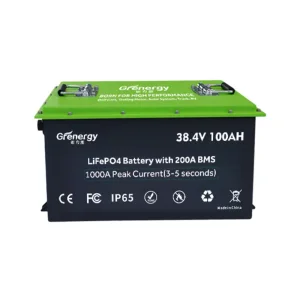
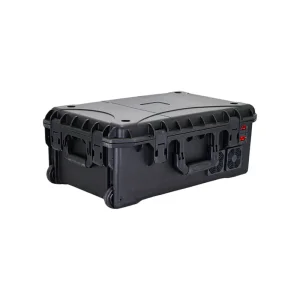
Addressing specific engineering requirements for international infrastructure, industrial projects, and mobility fleets.
Procurement managers, EPC contractors, and brand owners face unique challenges when purchasing battery energy storage systems. Standards vary across countries: local grid codes (such as UL9540 in the US, CEI 0-21 in Italy, or G99 in the UK) require specialized hardware and software configurations. At Grenergy, we address these localized needs through our technical design phase.
Our OEM/ODM services go beyond simple branding. We customize the BMS communication protocol to integrate with your preferred inverter manufacturer (e.g., Victron, Growatt, SMA, Solis). We customize enclosure dimensions, thermal design (air cooling or liquid cooling), and busbar paths to fit specific space limits. Partnering with Grenergy provides access to tier-1 manufacturing, professional design support, and clear logistics management.
Technical answers to common questions about battery integration, cell chemistry, and factory standards.
 Grenergy