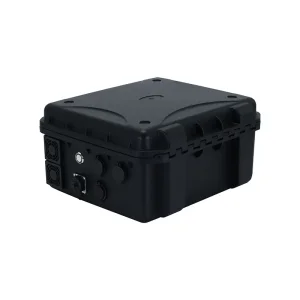
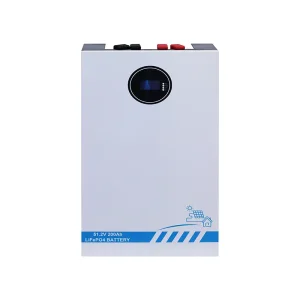
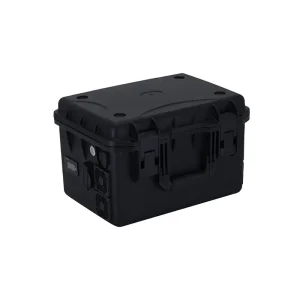
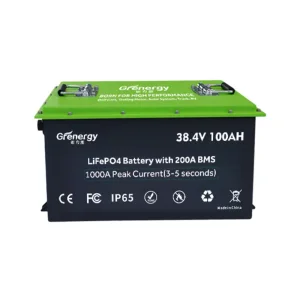
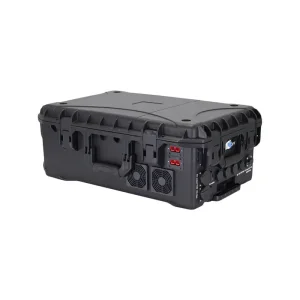
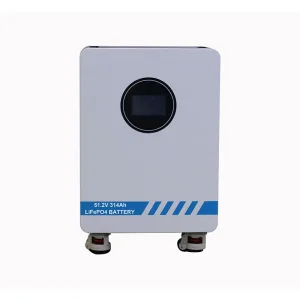
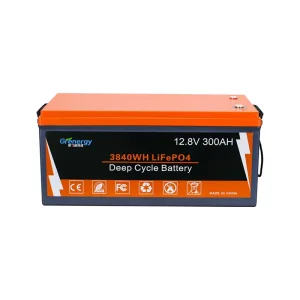
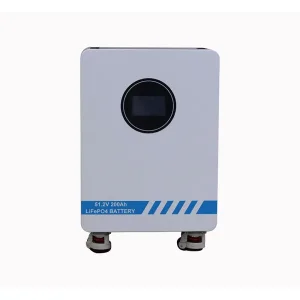
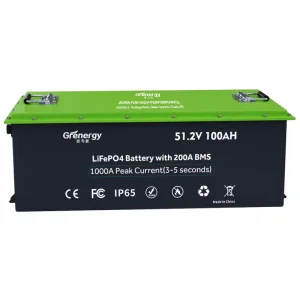
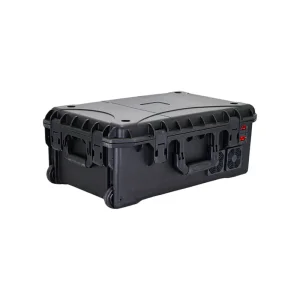
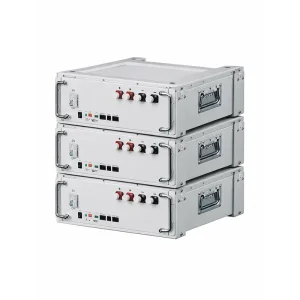
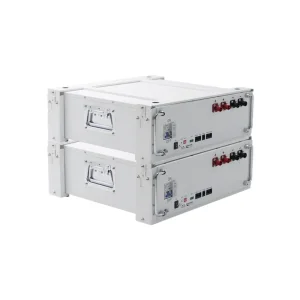
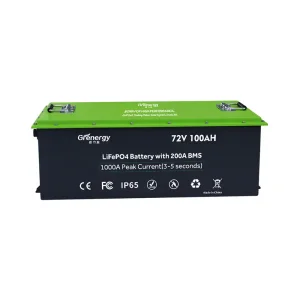
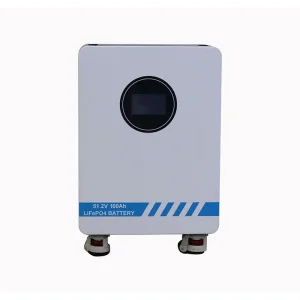
Explore our flagship high-performance battery systems built with intelligent management architectures, customized for industrial, home backup, and vehicle use.
Understanding how a JBD BMS 200A orchestrates continuous raw power while ensuring safety across multiple lithium chemistries.
Handling 200A continuous current produces significant thermal energy. Premium JBD BMS designs leverage parallel high-efficiency MOSFET arrays with extremely low RDS(on) values, ensuring less power is dissipated as waste heat, eliminating the risk of localized thermal runaway.
State of Charge (SOC) tracking at high amperages requires milli-ohmic shunts. By monitoring continuous voltage drop over a precision copper-alloy resistor, the integrated microcontrollers calculate current, Coulomb count, and real-time degradation with an accuracy tolerance under 1.5%.
Equipped with native UART, RS485, and CAN bus ports, the BMS exposes configuration registries. Installers can interface with Android/iOS systems via Bluetooth, adjust high/low temperature cut-off parameters, calibrate cell impedance profiles, and export logging data.
SEO Insight & Technical Warning: Operating a battery management board continuously at 200A requires external heat sinking, dynamic air circulation, and solid copper busbar connection points. Ensure terminal crimps are torqued according to international safety standards to minimize contact resistance.
The international battery value chain is shifting from basic safety switches to highly reliable management systems. As key markets in the EU, North America, and APAC target net-zero grids, the need for intermediate high-power systems (specifically 12V, 24V, and 48V topologies drawing up to 200A) has grown significantly. Industrial utility carts, off-grid cabins, telecom centers, and marine auxiliary power systems require continuous loads that only a robust BMS can govern.
In the United States and Northern Europe, rigorous regulatory compliance under UL 1973 and IEC 62619 has forced system integrators to seek factory-certified partners. Shenzhen Grenergy Technology Co., Ltd. addresses these demands by engineering complete system-level solutions that leverage advanced BMS layers alongside high-grade LiFePO₄ prismatic cells.

A high-amperage BMS does not operate in a vacuum. Here are the specific environments where a JBD BMS 200A-configured pack demonstrates peak capability.
Modern RVs and yachts deploy high-power inverters (3000W to 5000W) to run air conditioners, microwaves, and water heaters. At 12.8V, a 3000W inverter draws roughly 230A under peak stress. Utilizing a high-quality 200A continuous BMS allows safe, uninterrupted runtimes with high transient surge tolerance.
Remote telecommunication infrastructure and grid-isolated offices deploy 48V LiFePO₄ battery banks. A 200A continuous current capacity allows up to 10.2 kW of power transmission per module, optimizing energy flow and reducing the number of parallel connections required.
Industrial utility carts and heavy golf carts experience volatile torque demands during acceleration and steep climbs. The BMS features customized over-current delay settings to absorb high peak demands without triggering premature safety shut-offs.
Critical telecom base stations require reliable standby systems. A high-amp BMS manages cell voltages to prevent micro-discharges, keeping cells healthy and responsive during sudden utility outages.
A head-to-head architectural analysis comparing JBD BMS 200A configurations with standard alternative rating classes.
| Functional Metric | Standard 100A BMS Architecture | Advanced JBD BMS 200A System | High-Voltage Industrial 300A+ Units |
|---|---|---|---|
| Continuous Current Range | 0 - 100 Amps | 0 - 200 Amps | 0 - 300+ Amps |
| Optimal Application | Small Solar, Low-draw backup | Marine, Heavy RV, Solar Storage, Utility Vehicles | Commercial Energy Storage (ESS), EV Powertrains |
| Thermal Signature (Full Load) | Low to Moderate (< 45°C) | Active cooling recommended (< 55°C) | Forced cooling mandatory (> 60°C) |
| Balance Current (Passive) | 30mA - 50mA | 50mA - 150mA (Smart Configurable) | 200mA+ or Active Balancing |
| Supported Chemistries | LiFePO₄ / Li-ion (Fixed) | LiFePO₄ / LTO / Li-ion (Programmable) | LiFePO₄ / Solid State / High-Voltage Packs |
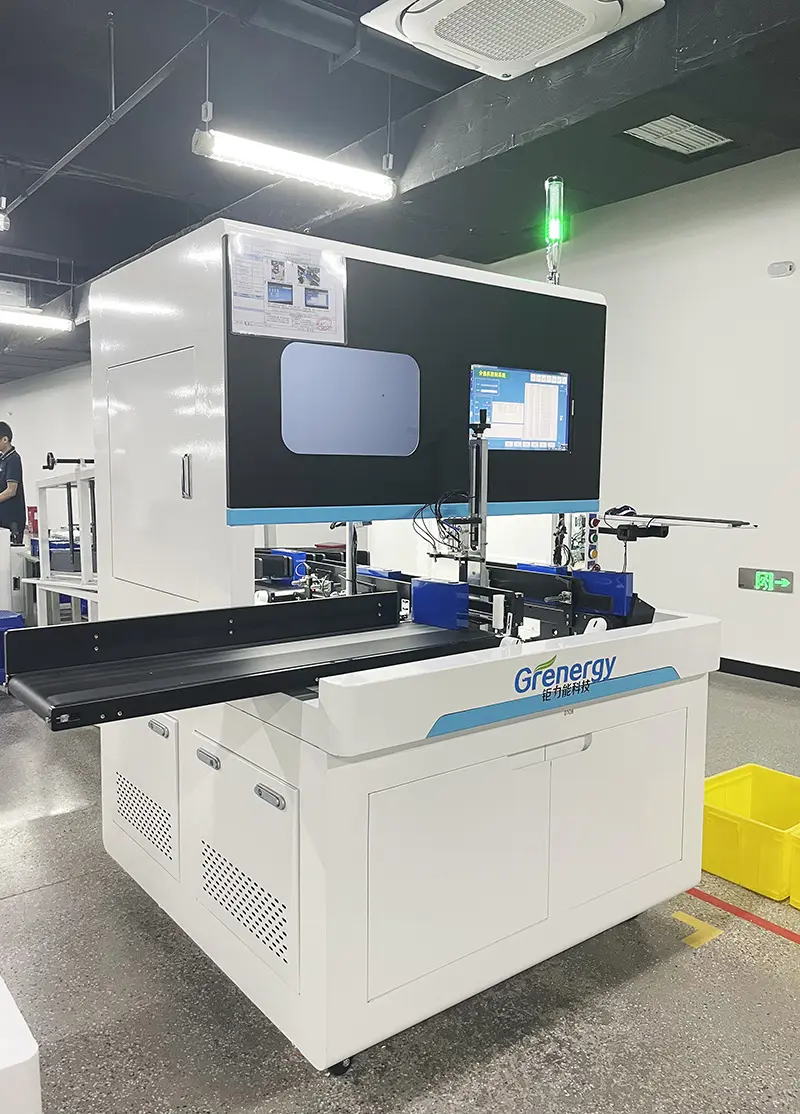
Shenzhen Grenergy Technology Co., Ltd., established in 2010, is a premier high-tech enterprise specializing in the R&D, manufacture, and deployment of high-grade lithium batteries, comprehensive energy storage systems, advanced power packs, and modern battery management systems. Over the last decade, we have dedicated ourselves to building clean, robust, and eco-friendly energy solutions for residential, commercial, and industrial markets globally.
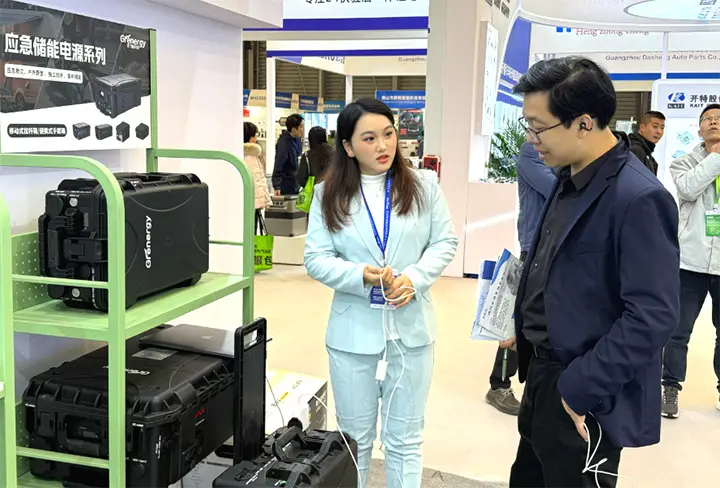
Our product portfolio has evolved from simple lead-acid replacement batteries to sophisticated storage products, including wall-mounted power walls, mobile home backup systems, and heavy-duty trolley box power stations. Driven by integrity and technological innovation, Grenergy bridges the gap between raw electrochemical potential and safe, long-term system performance.
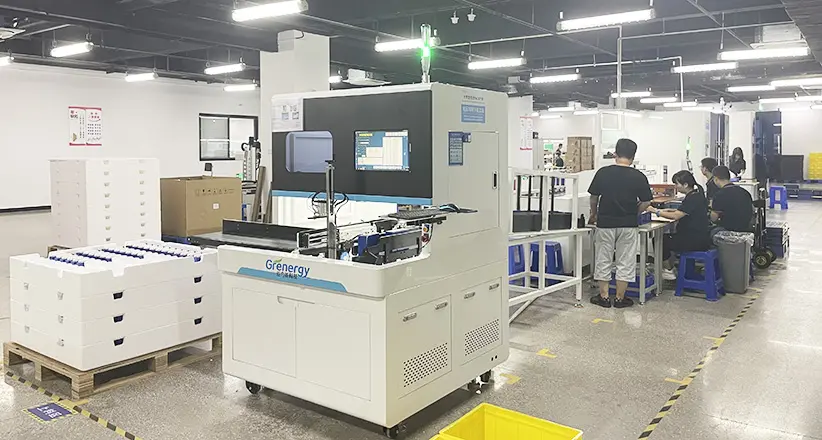
Scale means nothing without safety. Grenergy's 10,000 square meter state-of-the-art production facility operates under strict international certifications, ensuring that every product we assemble complies with global industrial standards. Our production protocols are audited and certified to meet ISO9001, ISO14001, and ISO45001 standards.
Our product lines have earned certifications including UL, CE, FCC, PSE, and UN38.3. Furthermore, to provide complete peace of mind to our international commercial clients, we carry a $3 million USD third-party product liability insurance policy. This level of institutional assurance reflects our focus on reliability, quality, and long-term partnership.

The transition from mechanical relays to cloud-integrated intelligent battery governance is shifting how we manage backup systems.
Traditional state estimation utilizes basic voltage-lookups. Future systems will deploy on-chip machine learning models (AI-BMS) that process dynamic impedance profiles, predicting degradation and cell failure hours before anomalous behavior occurs.
Integrating IoT cellular connectivity directly onto the BMS board permits real-time fleet diagnostics. Battery operators can review fleet performance from centralized dashboards, optimize discharge schedules, and deploy firmware updates over the air.
Passive cell balancing burns off excess energy as heat. Emerging roadmaps prioritize active charging balance topologies, transferring electrical energy from higher-charge cells to weaker cells, optimizing capacity utilization while maintaining cool operating runs.
Global energy integration requires strategic collaboration between component manufacturers, pack designers, and software engineers. At Shenzhen Grenergy Technology Co., Ltd., we act as a bridge for key technology partnerships. By working alongside major organizations, component developers, and certification bodies, we keep our systems at the cutting edge of energy storage technology.

Our clients benefit from structured OEM and ODM services. From initial circuit diagram planning, thermal analysis, and software profile setup, to safety certification and logistics support, we offer end-to-end engineering solutions. Whether you require standard modular rack systems or customized power packs, our professional staff delivers quality at scale.
Grenergy was founded with a clear goal: to make sustainable energy storage reliable and accessible. We believe that clean energy is essential to modern society, and we design our products to support that future. Through ongoing R&D, we build battery packs that operate safely under demanding conditions, helping businesses optimize their energy transitions.
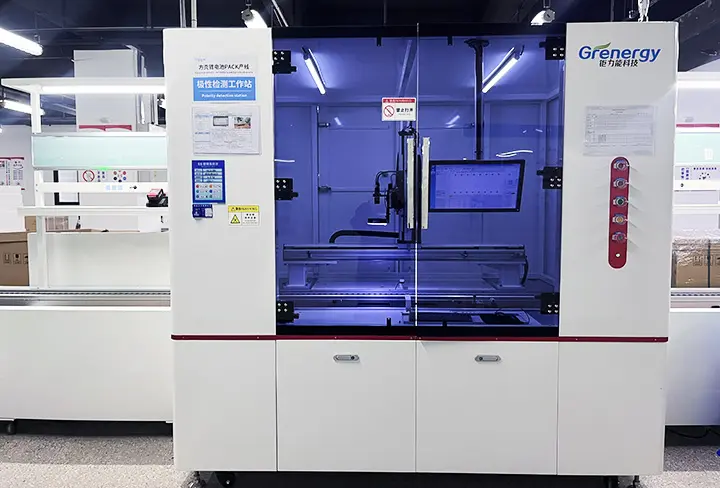
Our quality control process starts at the component level. Every incoming BMS board goes through automatic functional testing, where microcontrollers are calibrated and over-current switches are verified. The cells are matched using precise capacity sorting systems, ensuring balanced charge levels across the final pack. We perform full thermal testing on assembled systems to verify heat dissipation properties under constant load conditions, ensuring long-term safety in the field.
By combining high-quality components, detailed assembly standards, and strict testing, Grenergy builds energy storage solutions that deliver reliable power for industrial, commercial, and residential projects worldwide.
Expert technical answers to common integration questions regarding high-amperage battery management systems.
The JBD 200A BMS is rated for continuous current delivery of 200 Amps under adequate thermal management conditions. Peak transient surges (such as starting electric motors) can be tolerated up to 3-4 times the rated capacity (e.g., 600A to 800A) for very short durations (typically 100 milliseconds to 3 seconds), after which the overcurrent protection circuit triggers a shutdown to protect the MOSFET arrays.
Connecting BMS-controlled packs in series requires checking the maximum voltage rating of the MOSFETs (often limited to 4S or 12V/24V configurations, unless designed for high-voltage use). Parallel connection is common but requires pack voltages to be balanced within 0.1V of each other before connection to prevent high currents from flowing between the packs and triggering the BMS protection.
Charging lithium batteries (specifically LiFePO₄) below 0°C (32°F) causes lithium plating on the anodes, which can lead to internal short-circuits. The JBD BMS monitors temperature through external NTC thermistors. If cell temperatures drop below 0°C (or a user-configured threshold), the BMS disables charging while keeping discharging active to support safety heaters.
Passive balancing burns off excess energy from higher-voltage cells as heat through resistors, usually at current levels of 50mA to 150mA. Active balancing transfers charge from higher-voltage cells to weaker cells with higher efficiency and currents (typically 1A to 2A), which helps keep high-capacity cells balanced during rapid cycles.
Incorrect SOC calculations usually happen when the nominal battery capacity parameter is set incorrectly in the app, or when the BMS has not completed a full charge-discharge cycle. To calibrate, charge the pack until the BMS triggers cell over-voltage protection, then discharge it completely to the low-voltage cut-off to allow the shunt to register the capacity range.
Explore our additional power systems, including rack-mounted batteries, trolley power units, and vehicle utility power packs built to demanding industrial specs.
 Grenergy